Tampilkan postingan dengan label News. Tampilkan semua postingan

Sabtu, 04 September 2010

MILITER TERKUAT ke-14


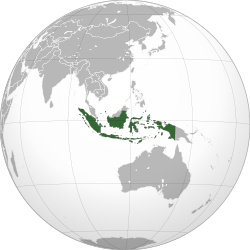
Tahukah kalian bahwa INDONESIA adalah negara yang memiliki militer yang terkuat ke-14 didunia?
ya.. indonesia benar berada pada posisi ke-14 negara terkuat militernya. seperti yang diungkap US Library of Congress; Badan Intelijen Pusat, [ ... ]

Rank 1-10 Pengamatan: Amerika Serikat (GFP rumus nilai 0,184) tetap merupakan pemimpin yang tak perlu dari daftar kami terima kasih kepada mereka tetap "aktif" di hotspot global, menampilkan angkatan laut terbesar di dunia dan terus miskin di gumpalan uang ke pertahanan. formula kami melihat tepi Cina dari Rusia tetapi hanya oleh margin tipis (0,238 versus 0,241 masing-masing) dengan kelebihan dalam tenaga kerja yang tersedia dan modal finansial. Perancis (0,636) dan Jerman (0,672) yang relatif sama untuk sebagian besar tapi rumus GFP memberikan sedikit tepi mengucapkan terima kasih Perancis untuk sebuah kapal induk dan angkatan laut mampu serta gundukan di anggaran pertahanan. Brasil (0,756) adalah negara yang paling kuat di Amerika Selatan dalam daftar terima kasih kepada tenaga kerja yang tersedia dan mampu angkatan laut. Jepang (0,920) adalah tidur "" kekuatan yang menyelinap ke dalam sepuluh besar dengan angkatan laut yang baik, infrastruktur logistik yang kuat dan modal.

Rank 11-20 Pengamatan: formula kami menyediakan untuk perbedaan baik antara Korea Utara dan Selatan, serta menempatkan Selatan-menjelang terima kasih Utara untuk infrastruktur yang lebih baik dan modal. penempatan Meksiko tinggi dalam daftar ini adalah menarik untuk dicatat - ini mencetak keseimbangan yang baik di seluruh papan di semua kategori utama. Israel akhirnya mendapat penempatan yang tepat dalam daftar tahun ini - hanya keluar dari sepuluh - olahraga tentara yang kuat dengan tanah sama pelatihan yang kuat, peralatan modern dan pengalaman tempur baru-baru ini.


Rank 21-30 Pengamatan: No kejutan di sini. Koleksi dasar kekuatan tentara modern pada umumnya sama.

1. U.S.A.
2. Cina
3. Rusia
4. India
5. U.K.
6. Perancis
7.Germany
8. Brazil
9. Jepang
10. Turki
11. Israel
12. Korea Selatan
13. Italia
14. Indonesia
15. Pakistan
16. Taiwan
17. Mesir
18. Iran
19. Meksiko
20. Korea Utara
21. Swedia
22. Yunani
23. Kanada
24. Arab Saudi
25. Ukraina
26. Australia
27. Spanyol
28. Thailand
29. Denmark
30. Polandia

Kekuatan Militer Indonesia

PERSONIL
Jumlah Penduduk: 237.512.352 [2008]
Tersedia Penduduk: 125.530.542 [2008]
Layanan Layak untuk Militer: 104.496.911 [2008]
Mencapai Usia Militer Tahunan: 4.291.700 [2008]
Personil Militer Aktif: 316.000 [2008]
Militer Aktif Cadangan: 400.000 [2008]
Aktif paramiliter Unit: 207.000 [2008]

ARMY
Jumlah Tanah Berbasis Senjata: 2.122
Tank: 425 [2004]
Personil Lapis Baja Operator: 684 [2004]
Artileri diderek: 293 [2004]
Self-albums Guns: 70 [2004]
Senjata anti-pesawat: 515 [2004]

Angkatan Laut
Kapal Angkatan Laut Jumlah: 111
Merchant Marine Strength: 971 [2008]
Mayor Pelabuhan dan pelabuhan: 10
Pesawat Operator: 0 [2008]
Kapal perusak: 0 [2008]
Kapal selam: 2 [2004]
Frigat: 15 [2004]
Patroli & Kerajinan Pesisir: 24 [2004]
Mine Warfare Craft: 12 [2004]
Kerajinan amfibi: 26 [2004]

AIR FORCE
Jumlah Pesawat: 313 [2004]
Helikopter: 194 [2004]
Berguna Bandar udara: 652 [2007]

KEUANGAN (USD)

Anggaran Pertahanan: $ 4740000000 [2008]
Asing Exch. & Gold: $ 56920000000 [2007]
Purchasing Power: $ 843.700.000 [2008]

MINYAK
Minyak Produksi: 837.500 bbl [hari / 2007]
Konsumsi Minyak: 1.100.000 bbl / [hari 2006]
Cadangan Minyak Terbukti: 4430000000 bbl [2007]

Logistik
Angkatan Kerja: 109.900.000 [2007]
Jalan raya: 391.009 km
Kereta Api: 6.458 km

GEOGRAFIS
Waterways: 21579 km
Pantai: 54.716 km
Square Tanah Luas: 1.919.440 km

Minggu, 16 Mei 2010

Gerhana Venus Minggu 16 Mei 2010


VIVAnews - Peristiwa langka gerhana Venus akan terjadi Minggu 16 Mei 2010. Gerhana yang terjadi sekitar 40 menit bisa disaksikan langsung dengan mata telanjang pukul 18.50 WIB.

"Kita bisa melihatnya malam Senin  secara langsung kalau cuaca cerah," kata Peneliti Utama Astronomi-Astrofisika Lembaga Penerbangan dan Antariksa Nasional (Lapan) Thomas Djamaluddin dalam pesan singkatnya kepada 
VIVAnews, Sabtu 15 Mei 2010.

Ba'da (usai) Magrib, kata profesor riset ini, masyarakat bisa mengarahkan tatapannya ke langit bagian barat.  Saat itu akan terlihat 'bintang' terang atau bintang kejora. Venus akan terlihat di atas bulan sabit.

"Sekitar pukul 18.50 WIB,  venus akan menghilang karena tertutup bulan yang disebut gerhana venus. Nanti setelah pukul 19.30 WIB, Venus akan muncul lagi di bawah bulan sabit. Semoga cuaca cerah," kata Djamal.

Prosesnya, lanjut Djamal, mirip gerhana Matahari,  di mana hanya wilayah tertentu saja yang dapat menyaksikan. "Kali ini  hanya Sumatera, Jawa, Kalimantan, dan Sulawesi. Hanya bagian barat yang dapat menyaksikan lengkap, Kalimantan dan Sulawesi hanya menyaksikan awalnya, okultasi atau gerhana Venus memang mirip gerhana Matahari saat Matahari tertutup bulan," beber dia.

Djamal menuturkan, setidaknya  terdapat 61 kota yang bakal mengalami gerhana Venus ketika masa menghilang (dissapearance) dan 34 kota bakal menikmati ketika venus kembali terbit (appareance)


dari : nasional.vivanews.com


Senin, 26 April 2010

Wordpress 3.0 Siap Dirilis Mei 2010


Wordpress 3.0 Siap Dirilis Mei 2010

SHIN
Wordpress 3.0 siap diluncurkan Mei 2010, tentunya dengan adanya penambahan fitur-fitur baru yang lebih oke dibandingkan versi sebelumnya dan ini sangat cocok untuk mengakomodir antara kebutuhan seorang blogger dan web developer atau web desainer. Pokoknya wordpress is the best, WordPress is a state-of-the-art publishing platform with a focus on aesthetics, web standards, mudah digunakan dan yang lebih penting gratis untuk digunakan.
Wordpress adalah sebuah CMS (sistem manajemen konten) yang pada awalnya dirancang untuk blogger. Namun saat ini Wordpress juga banyak digunakan para web developer dan pelaku bisnis professional untuk mengembangkan usahanya. Apalagi pada tahun 2009 kemaren Wordpress baru saja mendapatkan penghargaan dan memenangkan Best Open Source CMS Award dengan fitur terlengkap dan juga meraih Runner Up Best Open Source PHP. Sebuah keputusan yang tepat ketika dulu saya ingin ngeblog dengan memilih wordpress, walaupun kadang-kadang saya juga masih menggunakan blogspot. Berikut ini saya tampilkan beberapa situs besar bertaraf International yang menggunakan CMS Wordpress di antaranya :
  1.  CNN
  2. Fisherprice
  3. Wall Street Journal
  4. Forbes
  5. National Geographic
  6. Arena Magazine
  7. PopWatch Entertainment Weekly
  8. DC Universe
  9. Nikon
  10. CIDA Enterprises
  11. Pepsi
  12. Nokia
  13. Best Buy
  14. Ford
  15. Coca-Cola
Kembali ke laptop Wordpress 3.0, beberapa fitur tambahan dalam versi Wordpress 3.0 terbaru yang sebentar lagi akan segera dirilis antara lain :
  • Multi-User Feature.
    Wordpress akan digabung dengan WP-MU. Dengan fitur ini memungkinkan penggunanya untuk membuat beberapa blog sekaligus dengan hanya satu instalasi. Fitur ini sebelumnya hanya terdapat pada Wordpress MU. Kita dapat membuat bebarapa blog dan memilih sendiri alamat url blog-blog tersebut dengan sub-domain atau sub-directory, ini tentu akan menghemat jatah space yang ada.
  • Theme Default Telah Berubah.
    Tema default yang akan digunakan pada versi 3.0 ini yaitu bernama Twenty Ten, dan bisa dicustomisasi seperti Custom Header, Custom Background, Multiple Widget, Custom Navigation, Cascading Menu dll. Pokoknya lengkap tidak lagi berwarna biru seperti di versi sebelumnya yang sangat sederhana dan tanpa menu navigasi.
  • Pengaturan Menu Baru.
    Pengaturan menu pada Wordpress 3.0 akan digabungkan antara Pages, Categories, dan Link dan semuanya bisa dilakukan secara drag and drop.
  • Costomisasi Background.
    Pada Wordpress 3.0 ini pengguna bisa mengganti background blog sesuai selera dan bisa dilakukan dengan lebih mudah.
Rencana Jadwal Update Wordpress yaitu : Versi 3.0 akan dirilis pada bulan Mei 2010, Versi 3.1 pada bulan Agustus 2010 dan Versi 3.2 pada bulan November 2010.
Sumber : terjemahan bebas dan sedikit ngawur dari : http://wordpress.org/about/roadmap, http://technorati.com/blogging/article/wordpress-30-is-getting-ready-to.

Kamis, 08 April 2010

New Earth Epoch Has Begun, Scientists Say


New Earth Epoch Has Begun, Scientists Say

Welcome to the "new man" age (official confirmation pending).


Fiery mushrm. cloud rising fr. surreal red/black cloud strata in OP Redwing, shot Mohawk atomic bomb test blast over Enewetak Atoll.  (Photo by Time Life Pictures/US Navy/Time Life Pictures/Getty Images)
Atomic bomb radiation signatures may help establish a start date for a new epoch.
Time Life Pictures
James Owen
Published April 6, 2010
The older you get, the faster the time goes.
Our 4.57-billion-year-old planet may know the feeling. After all, some scientists are suggesting Earth has already entered a new age—several million years earlier than it should have.
Earth's geologic epochs—time periods defined by evidence in rock layers—typically last more than three million years.
We're barely 11,500 years into the current epoch, the Holocene. But a new paper argues that we've already entered a new one—the Anthropocene, or "new man," epoch.
The name isn't brand-new. Nobel Prize-winner Paul Crutzen, a co-author of the paper, coined it in 2002 to reflect the unprecedented changes humans have wrought in the roughly 200 years since the industrial revolution.
The report, however, is part of new push to formalize the Anthropocene epoch.
Recent human impacts—including habitat destruction, environmental pollution, and animal and plant extinctions—have been so great that they'll result in an obvious boundary in Earth's rock layers, the authors say.
"We are so adept at using energy and manipulating the environment that we are now a defining force in the geological process on the surface of the Earth," said co-author Jan Zalasiewicz, a paleobiologist with the University of Leicester in the U.K.
Even so, it could take years or even decades for the International Union of Geological Sciences, the world's geological governing body, to formalize the new epoch.
Hard Evidence Needed
If the concept of the Anthropocene epoch is to be formalized, scientists will first have to identify and define a boundary line, or marker, that's literally set in stone.
"The key thing is thinking about how—thousands or hundreds of thousands of years in the future—geologists might come back and actually recognize in the sediment record the beginning of the Anthropocene," explained paleoclimatologist Alan Haywood of the University of Leeds in the U.K.
"It's not as straightforward as you might think, because the marker has to be very precise, and it has to be recognized in many different parts of the world," said Haywood, who wasn't involved in the new study.
One candidate for the marker is the distinctive radioactive signature left by atom bomb tests, which began in 1945. "The fallout is basically across the world," Haywood said.
In a similar way, scientists use traces of the element iridium left by meteor strikes to help define the boundary between the Cretaceous and Tertiary periods—about 65.5 million years ago, the time of the great dinosaur extinctions (prehistoric time line).
Today's life-forms, once fossilized, could also serve as future markers of the proposed Holocene-Anthropocene boundary, co-author Zalasiewicz told National Geographic News.
For instance, studies suggest that marine plankton now have a different carbon isotope signature than they did before humans began burning fossil fuels on a wide scale, Zalasiewicz said.
Likewise, permanent traces of pollution—such as lead particles released when leaded gasoline is burned—might help define the epoch.
Ulterior Motive?
The push for a formal declaration of the Anthropocene epoch is about more than just scientific curiosity.
The move, the scientists write in the latest issue of the journal Environmental Science & Technology, "might be used as encouragement to slow carbon emissions and biodiversity loss" or "as evidence in legislation on conservation measures."
The University of Leeds's Haywood said that, by underscoring how much we're changing the environment, the formalization would be "a very powerful statement."
But while "there are good scientific justifications for saying we have moved into the Anthropocene," he said, "we mustn't base that on a politically expedient decision."
Co-author Zalasiewicz also ruled out politics as a deciding factor.
"Changes to the geological time scale are treated with great seriousness by scientists," Zalasiewicz added, "particularly here, where we're dealing with a time interval which is only just starting."
Living in the Past?
Some scientists argue we haven't even entered the Holocene epoch—never mind the Anthropocene.
The Holocene, they say, isn't an epoch at all—just another warm period within the Pleistocene, which began about 2.6 million years ago.
"The period we're living in is the Ice Age, basically," said geologist Philip Gibbard of the University of Cambridge in the U.K. "There is no reason to think it has finished," if history is any guide.
Assuming human-made global warming doesn't change the climate on a geologic time scale, the Ice Age should go on for at least another million years, with continuing oscillations between warm and cold periods, Gibbard said.
"We would expect the oscillations [between warm and cold ages] which we have seen in the near past to continue for at least a period of one million years."
If scientists really want a time period defined by the presence of humans, he said, they've already got one—the Holocene, whose start date, he says, is based more on the dawn of civilization than on changes in the geological record.
"That means the Anthropocene concept is a little bit like adding sugar to the tea," Gibbard said.
Epoch Not Built in Day
Whatever the final decision on the Anthropocene, it won't be a hasty one, said co-author Zalasiewicz. "The Geological Time Scale is held dear by geologists [because it is fundamental to their work]," he and his co-authors write, "and it is not amended lightly."
An expert panel called the Anthropocene Working Group has already been formed within the International Union of Geological Sciences to consider the matter. But the committee will probably take three to five years to reach a verdict, Zalasiewicz said.
Any decision would then have to pass a series of review committees before going to the wider union for ratification.
Zalasiewicz said there might be more urgency to formalize the Anthropocene these days, given that the term "is out there, is being used by working scientists, and is being used in the scientific literature."
But, he said, formalization probably won't occur for at least ten years.....


Minggu, 04 April 2010

Frozen Fish Help Reel in Germany's Wind Power


Frozen Fish Help Reel in Germany's Wind Power


Wind turbines spin during a storm near Cuxhaven, Germany. Storing the power has been a challenge.
Photograph by Ingo Wagner, Corbis


Andrew Curry
Published April 2, 2010
Cuxhaven, a small city on Germany’s blustery North Sea coast, has ample supplies of fish and wind. A new project is exploring how these two abundant resources can work together to solve some of the problems that have bedeviled Germany’s renewable energy drive.
In short, Germany’s electric grid operators need a place to store all that wind power. And in Cuxhaven, they think they’ve found an answer -- in frozen fish.
One of renewable energy’s most vexing issues is the sheer variability of wind and solar power. It’s a headache for managers of the power system, whose customers need a steady, predictable stream of electricity. Germany is feeling the pain as a leader in alternative power, with 7 percent of its electricity fromwind energy -- one of the highest rates in the world.
“Sometimes there’s a high feed-in of wind power, and at other moments, renewables can only take a small part,” says Wolfram Krause, a researcher at Germany’s EWE power company and manager of Cuxhaven’s 20 million euro ($27 million) eTelligence pilot project, half of which is funded by the German government. “We need to damp out fluctuations of wind power,” he says, “and this is what cold storage can do.”
Deep Power Freeze
In a 5.5-million cubic foot (155,742 cubic meter) warehouse at the mouth of the Elbe River, Cuxhaven’s Erwin GOOSS warehouse unloads and stores the catch from fishing boats sailing in the North Sea. Ordinarily, the warehouse needs to be kept at a chilly -4 F (-20 C). But the temperature inside can be pushed as low as -22 F (-30 C) when local windmills are spinning. The deep freeze gives the warehouse breathing room at times when the wind -- and the power -- dies down. Then, if allowed to warm slowly, the facility still will stay cold enough for the frozen fish. “It’s not that we’re using less power, it’s just that we’re using it when it’s cheaper,” GOOSS technical director Gunter Krins says.
In the summer, the well-insulated warehouse warms about 2 degrees F (1.1 degrees C) every 24 hours when the cooling is turned off. In the winter, the building warms at about half that rate. Depending on the season, that means the shelves stacked with frozen fish can “store” energy equivalent to a week’s worth of refrigeration.
Krins’ warehouse isn’t alone. The pilot project, launched in November 2008, aims to connect all types of power users and electricity providers over the Internet. Hundreds of smart meters that monitor energy usage multiple times per second and transmit the information to an iPod touch have been distributed to local homes.
Major power consumers like the local wastewater treatment facility and the local pool are getting in on the act--adjusting how much electricity they use depending on how hard the wind is blowing. A sophisticated communications network lets people know when power is cheap and when to conserve. “We’ve built a measurement and information control infrastructure that can suck up all this data and give it to all the actors,” Krause says.
Curbing Wind Waste
The hope is that projects like eTelligence will help Germany curb a costly kind of energy waste. By law, German renewable energy producers are guaranteed a certain price for wind and solar power. That has helped Germany create a thriving renewable energy industry, but meshing it into a system accustomed to steady power -- like that from coal power plants -- has been a challenge. “Right now, we’re switching off wind farms if we have too much power in our grid,” says Oliver Weinmann, innovation manager for power company Vattenfall. That essentially means that consumers, through their utility bills, are paying wind farms not to produce energy. “It’s not a very good situation,” Weinmann says. “We have to find a solution to integrate all this wind power in our grid.”
Local efforts like eTelligence are catching on. Initially, Krause says, Cuxhaven’s fish warehouse owners were skeptical. But when it became clear that there was money involved -- cooling primarily during hours of peak wind production will be cheaper than just drawing electricity at all hours -- the proposal became a lot more appealing.
Over the next year, Krause and Krins will be closely watching the warehouse’s savings. “We need to see what the savings are,” Krins says. “But it’s a good idea – we’ve got plenty of wind right outside the door.”

Jumat, 02 April 2010

"Roaming" Magnetic Fields Found

"Roaming" Magnetic Fields Found


Weak "seed fields" may solve galaxy mystery


Particle jets shoot from a galaxy's central supermassive black hole in an artist's rendering.
Image courtesy Paolo Padovani, ESA, NASA, AVO

Brian Handwerk
Published April 1, 2010
Weak magnetic fields are "roaming" across the universe, according to a new study that may have solved the mystery of where the huge magnetic fields around galaxies come from.
Galaxies such as our Milky Way have their own large-scale magnetic fields. Although these fields are weak compared to planetary fields, scientists think the galactic versions help establish rates of star formation, guide cosmic rays, and regulate the dynamics of interstellar gas.
Most scientists believe the stronger magnetic fields of today's adult galaxies grew from weaker "seed" fields. But it's unclear where these older fields originated.
The two leading theories: The seed fields were created by the movement of charged gas in protogalaxies, or they were produced outside of galaxies by some unseen processes in the early universe.
New observations made with NASA's Fermi Gamma-ray Space Telescopesupport the idea that the seeds were there all along, even before galaxies themselves.
Based on Fermi's data, "we've found that these weak magnetic fields should be everywhere. They should be outside the galaxies, filling the whole universe, even where there are no galaxies, no clusters, no anything," said study co-author Andrii Neronov of the University of Geneva's ISDC Centre for Astrophysicsin Switzerland.
Since the new findings suggest magnetic fields can form outside galaxies, "perhaps those magnetic fields were created before the galaxies were formed," Neronov said.
Sowing the Seeds for Galactic Fields
According to the theory, primordial seed fields could have been created from charged particles spit out during violent events such as supernovae.
Over time, the theory goes, a seed field could bulk up inside a galaxy, because the galaxy's slow spin causes charged particles and gases to align along the seed's magnetic field lines. (Related: "Earth's Core, Magnetic Field Changing Fast, Study Says.")
But other seed fields would remain roaming through intergalactic space—and that's what Neronov and colleagues think they've found.
More precisely, the team saw a lack of very high-energy gamma rays in Fermi data on blazars, galaxies with supermassive black holes at their centers that spew jets of particles at near the speed of light.
The gamma rays that reach Earth from blazars should be at a certain energy level. But the gamma rays Neronov's team saw appear to have been sapped of some of their strength, which is exactly what would have happened if the gamma rays had interacted with weak magnetic fields along the way.
The researchers then modeled what happens when gamma rays crash into photons, or light particles. They found that the collisions spawn bundles of electromagnetic activity.
"What we've detected could be this initial weak field, and that could resolve the problem of the origin of [modern] magnetic fields in the Milky Way and other galaxies, because we may now know the initial conditions," Neronov said.
Magnetic Mysteries Remain
The scientists aren't sure which high-energy processes might have created the very first magnetic fields in a young, galaxy-less universe, although there's no shortage of candidates.
It's also unclear whether the roaming seed fields played a role in the subsequent formation of galaxies and galaxy clusters, since the fields' exact intensities have yet to be measured.
"In general, I tend to think that they do not play a significant role in the formation of the galaxies, because they are too weak" at the low levels the Fermi team observed, Neronov said.
The new Fermi data on blazars are published in this week's issue of the journalScience.


Kamis, 01 April 2010

Solar Brings Light to Haiti

Solar Brings Light to Haiti


Solar Power Brings Light to Quake-Darkened Haiti

Marianne Lavelle
National Geographic News
Published March 31, 2010

In the aftermath of the earthquake that devastated his country on January 12, Haitian businessman Alex Georges recalls both the darkness and the light.

From the Port-au-Prince house where he had been meeting with his business partner, Georges remembers stumbling into chaos: human suffering and a cloud of dust so thick that he could not see across the street.

But he also saw that at night, even though the shaken city had no electricity, there were bright islands of light—beneath the solar-powered street lamps that his company had installed at two sports fields. People were drawn to the glow and began to set up camps there.

Georges believes that solar energy can do more than provide temporary refuge for Haitians; he thinks it can be a permanent boon to the impoverished Caribbean nation.

As the co-founder of ENERSA (Energies Renouvelables S.A.), a three-year-old Port-au-Prince business that has manufactured and sold more than 500 LED solar streetlights with battery storage in 58 towns and villages throughout the island, Georges is one of a group of advocates and entrepreneurs pushing for greater use of solar, renewable, and other small-scale energy in the rebuilding of Haiti.

With a crucial meeting of representatives of more than a hundred countries taking place at the United Nations today to organize commitments for the rebuilding, renewable energy advocates have been urging relief organizations to direct aid toward more than simply rebuilding Haiti’s old power delivery system.

Energy Access

Before the earthquake, Haiti had one of the lowest rates of electricity access in the world, with only 12.5 percent of its population of nine million connected to the grid. Those who had money relied on small diesel fuel generators for electricity. The cost of diesel spiked after the earthquake, putting that form of power generation even further out of reach for most Haitians.

“Why saddle people with the variable costs and operating costs of diesel fuel?” asks Jigar Shah, chief executive of the Carbon War Room, the climate change advocacy organization founded by Virgin Atlantic billionaire Richard Branson. His group has calculated that solar and other small power systems could be installed throughout Haiti at a cost of $400 million, a fraction of the $11.5 billion in rebuilding funds that United Nations Secretary General Ban Ki-Moon has called for over the next decade.

Vijay Modi, an energy systems expert at Columbia University’s Earth Institute, which works to advance sustainable development, says that renewables can, indeed, play an immediate role in meeting the electricity needs of Haiti. But Haiti also has urgent energy needs for cooking as well as lighting and cell phone charging solutions.

When it comes to household cooking needs, Modi believes that in the short term, people would be more helped by distribution of kerosene or propane. In the longer term, he believes, there should be a focus on more sustainable land management practices to provide the wood and charcoal traditionally used for cooking in Haiti—fuels that can be renewable when well managed.

Renewable energy advocates working on the ground in Haiti agree that more efficient use of wood and charcoal will continue to be used in the short term for cooking, although biochar (charcoal from agricultural waste) could be a more environmentally friendly solution. They also worry about the use of kerosene for lighting in the short term for a reason more immediate than its impact on the climate—in addition to the harmful fumes, the fire hazard is acute in the tent camps where so many Haitians are now living.

Security Need

The tent camps, in fact, have turned to solar energy for yet another pressing need—security. Soon after the quake, renewable energy access specialist Richenda Van Leeuwen, of Washington, D.C., organized a donation by the Good Energies Foundation of 6,500 solar light systems that can be used now in tents—and later transferred to new homes.

Van Leeuwen, now working on relief in Haiti, says that the lighting has been vital in addressing the issue of assaults. Only last week, Amnesty International reported that sexual violence against women and girls was widespread in the camps, and called for more action from emergency responders and authorities. At least 35,000 solar lamp systems have been distributed to improve lighting in the camps so far, and Van Leeuwen says the International Organization for Migration is ordering 30,000 more to help with protection of women and girls in particular.

With Haiti’s infrastructure in tatters, and funds being raised around the world, many believe it is an ideal time to deploy new power for Haiti. For example, last summer, the nonprofit Partners In Health successfully had a solar system installed in its clinic in Boucan CarrĂ©, Haiti.

Although the clinic maintains its diesel generator system as backup and to ensure reliable power in its operating room and for the higher energy needs of its x-ray machine, its diesel fuel expenses have been slashed. After the quake, in fact, Partners asked the Washington, D.C.-based Solar Electric Light Fund (SELF), which is supported in part by the Good Energies Foundation, to accelerate a plan to install solar in five of its other clinics in Haiti.

“It’s very low maintenance, there’s no local pollution, no carbon dioxide, no noise,” says Bob Freling, executive director of SELF. “We have not completely dispensed with diesel, but reduced their reliance. It really empowers people.”

There have been other solar donations with an eye on empowerment. Texas-based FTL Solar has donated three large solar tents to be used by charities; these provide not only light but a source of income, since the charities will be able to earn money by setting up stations where people can pay to have their cell phones or batteries recharged.

Renewable energy activist and film producer Nicole Hansen, president of Green Galaxy Enterprises, helped coordinate the donation, remembering that she saw the solar tents in action at the site of films under production around Hollywood.

Job Creation

But Georges, of ENERSA, and company co-founder Jean-Ronel Noel, believe that what Haiti needs beyond donations of finished solar products is the money to build up its own capacity to make and install solar systems. The pair, after studying engineering, business administration, and solar fabrication in Canada, have trained 18 young men as solar technicians and are training a group of 10 more in hope of expanding their work force.

ENERSA workers have not only manufactured solar panels, lamps, charging stations, and streetlights, they’ve taken them to villages so remote that the equipment had to be hauled by donkey. “It is life-changing for people who did not have electricity whatsoever” to have the access to solar light, says Georges. “Children can study, and parents can meet and just socialize after dark. You can change the life of the community, instantly.”

ENERSA’s factory, which was damaged in the earthquake, is set to resume manufacturing this week.


Rabu, 31 Maret 2010

Pohon Terbesar di Dunia..........!!!

         Salah satu dari pohon-pohon paling tinggi di dunia dari jenis Giant Sequoia ini memiliki ketinggian mencapai 85 meter. Umurnya diperkirakan antara 2200 hingga 2700 tahun. Pohon ini diberi nama "Jenderal Sherman", diperkirakan bukan hanya merupakan salah satu yang tertinggi , tapi juga merupakan jenis Sequoia yang terbesar dalam hal volume-nya. Di tahun 2002 pohon ini pernah terukur volumenya yang sebesar 1487 meter kubik.


Pohon Sherman ini berlokasi di Taman Nasional Sequoia di Visalia, California, dinamakan demikian diambil dari nama seorang veteran perang sipil Amerika Jendral William Tecumseh Sherman. James Wolverton seorang Letnan pada kavaleri Indiana ke-9 di bawah pimpinan Sherman menamakan pohon ini dengan nama bos-nya pada tahun 1879. Pohon ini sebenarnya sudah dianugerahi gelar sebagai yang terbesar sejak tahun 1931 dilihat dari faktor volume-nya.

Diukur dari dimensinya, pohon Sherman ini mengindikasikan menjadi semakin besar tiap tahunnya. Diameternya 1,4 meter di atas tanah adalah 7,7 meter, diameter 18 meter di atas tanah adalah 5,3 meter, diameter 55 meter di atas tanah adalah 4,3 meter, dan ketinggian dahan pertama dari atas tanah adalah sekitar 40 meter.

Yang menarik, dahan terbesarnya patah pada tahun 2006. Bentuknya seperti huruf "L" menghunjam dari kira-kira seperempat ketinggian pohon. Dahan ini mempunyai diameter 2 meter dengan panjang 30 meter dan menghancurkan pagar yang dibuat di sekelilingnya. Meski demikian tetap saja pohon ini masih menjadi makhluk hidup terbesar di muka bumi yang masih hidup.


AMAZING..........!!!
dikutip dari: http://aneh-tapi-nyata.blogspot.com

Darksiders segera rilis untuk PC


Pihak THQ resmi mengumumkan bahwa mereka tengah mengerjakan port game Darksiders untuk versi PC. Darksiders adalah game action RPG yang telah rilis ke dalam console Xbox 360 dan Playstation 3. THQ mengatakan bahwa tepat bulan Juni 2010 yang akan datang, mereka akan segera merilis Darksiders versi PC. Sampai sekarang masih belum ada informasi detail lebih lanjut mengenai Darksiders versi PC ini, tetapi pihak developer mengatakan bahwa versi PC akan memberikan beberapa fitur tambahan selain dari resolusi yang lebih tinggi dan tampilan kualitas visual grafik yang lebih bagus daripada versi consolenya.[Hatune/Megindo.net]

Jumat, 26 Februari 2010

Asal usul planet Nibiru

Bagian luar Tata Surya masih memiliki banyak planet-planet minor yang belum ditemukan. Sejak pencarian untuk Planet X dimulai pada awal abad ke 20, kemungkinan akan adanya planet hipotetis yang mengorbit Matahari dibalik Sabuk Kuiper telah membakar teori-teori Kiamat dan spekulasi bahwa Planet X sebenarnya merupakan saudara Matahari kita yang telah lama “hilang”.
Tetapi mengapa cemas duluan akan Planet X/Teori Kiamat ini? Planet X tidak lain hanya merupakan obyek hipotetis yang tidak diketahui?
Teori-teori ini didorong pula dengan adanya ramalan suku Maya akan kiamat dunia pada tahun 2012 (Mayan Prophecy) dan cerita mistis Bangsa Sumeria tentang Planet Nibiru, dan akhirnya kini memanas sebagai “ramalan kiamat” 21 Desember 2012. Namun, bukti-bukti astronomis yang digunakan untuk teori-teori ini benar-benar melenceng.

Pada 18 Juni kemarin, peneliti-peneliti Jepang mengumumkan berita bahwa pencarian teoretis mereka untuk sebuah massa besar di luar Tata Surya kita telah membuahkan hasil. Dari perhitungan mereka, mungkin saja terdapat sebuah planet yang sedikit lebih besar daripada sebuah obyek Plutoid atau planet kerdil, tetapi tentu lebih kecil dari Bumi, yang mengorbit Matahari dengan jarak lebih dari 100 SA. Tetapi sebelum kita terhanyut pada penemuan ini, planet ini bukan Nibiru, dan bukan pula bukti akan berakhirnya dunia ini pada 2012. Penemuan ini penemuan baru dan merupakan perkembangan yang sangat menarik dalam pencarian planet-planet minor dibalik Sabuk Kuiper.

Dalam simulasi teoretis, dua orang peneliti Jepang telah menyimpulkan bahwa bagian paling luar dari Tata Surya kita mungkin mengandung planet yang belum ditemukan. Patryk Lykawa dan Tadashi Mukai dari Universitas Kobe telah mempublikasikan paper mereka dalam Astrophysical Journal yang menjelaskan tentang planet minor yang mereka yakini berinteraksi dengan Sabuk Kuiper yang misterius itu.
Kuiper Belt Objects (KBOs)

Sabuk Kuiper menempati wilayah yang sangat luas di Tata Surya kita, kira-kira 30-50 SA dari Matahari, dan mengandung sejumlah besar obyek-obyek batuan dan metalik. Obyek terbesar yang diketahui adalah planet kerdil (Plutoid) Eris. Telah lama diketahui bahwa Sabuk Kuiper memiliki karakteristik yang aneh, yang mungkin menandakan keberadaan sebuah benda (planet) besar yang mengorbit Matahari dibalik Sabuk Kuiper. Salah satu karakterikstik tersebut adalah yang disebut dengan “Kuiper Cliff” atau Jurang Kuiper yang terdapat pada jarak 50 SA. Ini merupakan akhir dari Sabuk Kuiper yang tiba-tiba, dan sangat sedikit obyek Sabuk Kuiper yang telah teramati dibalik titik ini. Jurang ini tidak dapat dihubungkan terhadap resonansi orbital dengan planet-planet masif seperti Neptunus, dan tampaknya tidak terjadi kesalahan (error) pengamatan. Banyak ahli astronomi percaya bahwa akhir yang tiba-tiba dalam populasi Sabuk Kuiper tersebut dapat disebabkan oleh planet yang belum ditemukan, yang mungkin sebesar Bumi. Obyek inilah yang diyakini Lykawka dan Mukai telah mereka perhitungkan keberadaannya.

Peneliti Jepang ini memprediksikan sebuah obyek besar, yang massanya 30-70 % massa Bumi, mengorbit Matahari pada jarak 100-200 SA. Obyek ini mungkin juga dapat membantu menjelaskan mengapa sebagian obyek Sabuk Kuiper dan obyek Trans-Neptunian (TNO) memiliki beberapa karakteristik orbital yang aneh, contohnya Sedna.

Sejak ditemukannya Pluto pada tahun 1930, para astronom telah mencari obyek lain yang lebih masif, yang dapat menjelaskan gangguan orbital yang diamati pada orbit Neptunus dan Uranus. Pencarian ini dikenal sebagai “Pencarian Planet X”, yang diartikan secara harfiah sebagai “pencarian planet yang belum teridentifikasi”. Pada tahun 1980an gangguan orbital ini dianggap sebagai kesalahan (error) pengamatan. Oleh karena itu, pencarian ilmiah akan Planet X dewasa ini adalah pencarian untuk obyek Sabuk Kuiper yang besar atau pencarian planet minor. Meskipun Planet X mungkin tidak akan sebesar massa Bumi, para peneliti masih akan tetap tertarik untuk mencari obyek-obyek Kuiper lain, yang mungkin seukuran Plutoid, mungkin juga sedikit lebih besar, tetapi tidak terlalu besar.
“The interesting thing for me is the suggestion of the kinds of very interesting objects that may yet await discovery in the outer solar system. We are still scratching the edges of that region of the solar system, and I expect many surprises await us with the future deeper surveys.” – Mark Sykes, Direktur Planetary Science Institute (PSI) di Arizona.
Planet X tidaklah menakutkan

Jadi darimana Nibiru ini berasal? Pada tahun 1976 sebuah buku kontroversial berjudul “The Twelfth Planet” atau “Planet Keduabelas” ditulis oleh Zecharian Sitchin. Sitchin telah menerjemahkan tulisan-tulisan kuno Sumeria yang berbentuk baji (bentuk tulisan yang diketahui paling kuno). Tulisan berumur 6000 tahun ini mengungkapkan bahwa ras alien yang dikenal sebagai Anunnaki dari Planet yang disebut Nibiru, mendarat di Bumi. Ringkas cerita, Anunnaki memodifikasi gen primata di Bumi untuk menciptakan homo sapien sebagai budak mereka.

Ketika Anunnaki meninggalkan Bumi, mereka membiarkan kita memerintah Bumi ini hingga saatnya mereka kembali nanti. Semua ini mungkin tampak sedikit fantastis, dan mungkin juga sedikit terlalu detil jika mengingat semua ini merupakan terjemahan harfiah dari tulisan kuno berumur 6000 tahun. Pekerjaan Sitchin ini telah diabaikan oleh komunitas ilmiah sebagaimana metode interpretasinya dianggap imajinatif. Meskipun demikian, banyak juga yang mendengar Sitchin, dan meyakini bahwa Nibiru (dengan orbitnya yang sangat eksentrik dalam mengelilingi Matahari) akan kembali, mungkin pada tahun 2012 untuk menyebabkan semua kehancuran dan terror-teror di Bumi ini. Dari “penemuan” astronomis yang meragukan inilah hipotesa Kiamat 2012 Planet X didasarkan. Lalu, bagaimanakah Planet X dianggap sebagai perwujudan dari Nibiru?
Kemudian terdapat juga “penemuan katai coklat di luar Tata Surya kita” dari IRAS pada tahun 1984 dan “pengumuman NASA akan planet bermassa 4-8 massa Bumi yang sedang menuju Bumi” pada tahun 1933.

Para pendukung hipotesa kiamat ini bergantung pada penemuan astronomis ini sebagai bukti bahwa Nibiru sebenarnya adalah Planet X yang telah lama dicari para astronom selama abad ini. Tidak hanya itu, dengan memanipulasi fakta-fakta tentang penelitian-penelitian ilmiah, mereka “membuktikan” bahwa Nibiru sedang menuju kita (Bumi), dan pada tahun 2012, benda masif ini akan memasuki bagian dalam Tata Surya kita, menyebabkan gangguan gravitasi.

Dalam pendefinisian yang paling murni, Planet X adalah planet yang belum diketahui, yang mungkin secara teoretis mengorbit Matahari jauh di balik Sabuk Kuiper. Jika penemuan beberapa hari lalu memang akhirnya mengarah pada pengamatan sebuah planet atau Plutoid, maka hal ini akan menjadi penemuan luar biasa yang membantu kita memahami evolusi dan karakteristik misterius bagian luar Tata Surya kita.

Sumber: Freenet4all.com
 

Design By SkinCorner | Distributed By FreeAnimeTheme